
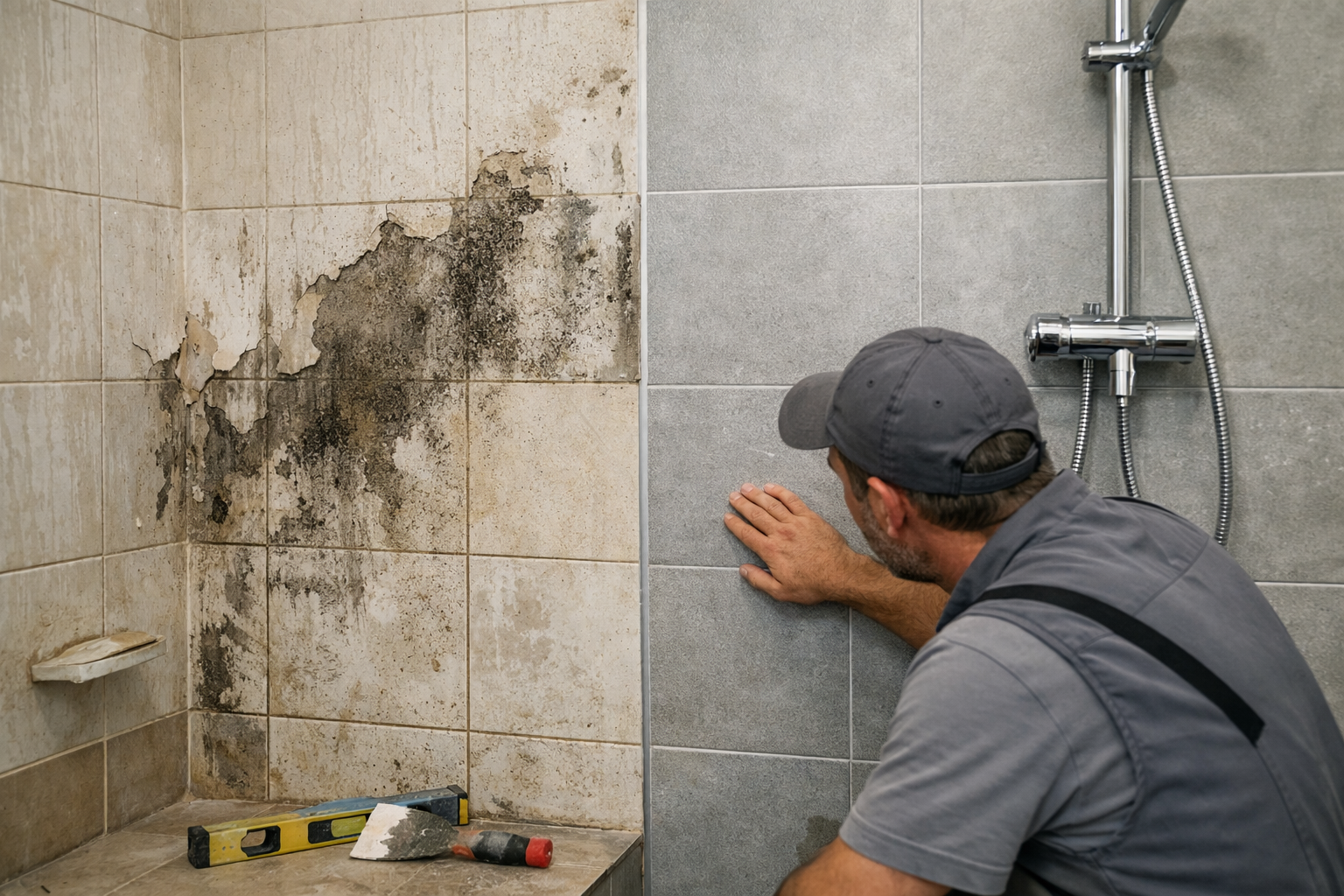
Excessive moisture in certain rooms of the house represents a major challenge for the durability and aesthetics of walls. The most effective wall coverings against moisture in damp areas are ceramic tiles, PVC panels, waterproof paint, and special lime or cement renders. These materials provide an impermeable barrier while resisting mold and water damage. Let’s explore in detail the solutions suited to each situation and their technical characteristics.
Waterproof materials: the first line of defense
When it comes to moisture, not all coverings are equal. Some materials have naturally waterproof properties that make them ideal allies for providing lasting protection for your walls in damp areas such as bathrooms, kitchens, or cellars.
Ceramic tile: the essential reference
Tiling remains the most widespread and reliable solution for wet rooms. Its impermeable vitrified structure completely prevents water from penetrating the wall substrate. Ceramic, stoneware, and earthenware tiles offer exceptional resistance to constant humidity, water splashes, and temperature variations.
Tiling installation requires particular attention to the grout joints. These must be made with a waterproof mortar and treated with a waterproofing product to prevent any infiltration. A silicone joint at corners and connections effectively completes the waterproofing system.
PVC and composite panels
PVC wall panels are a modern and cost-effective alternative to traditional tiling. Their fully waterproof synthetic composition provides excellent resistance to water and condensation. Easy to install, they can be fitted directly onto a sound wall or a framework, offering a quick solution for renovating a wet room.
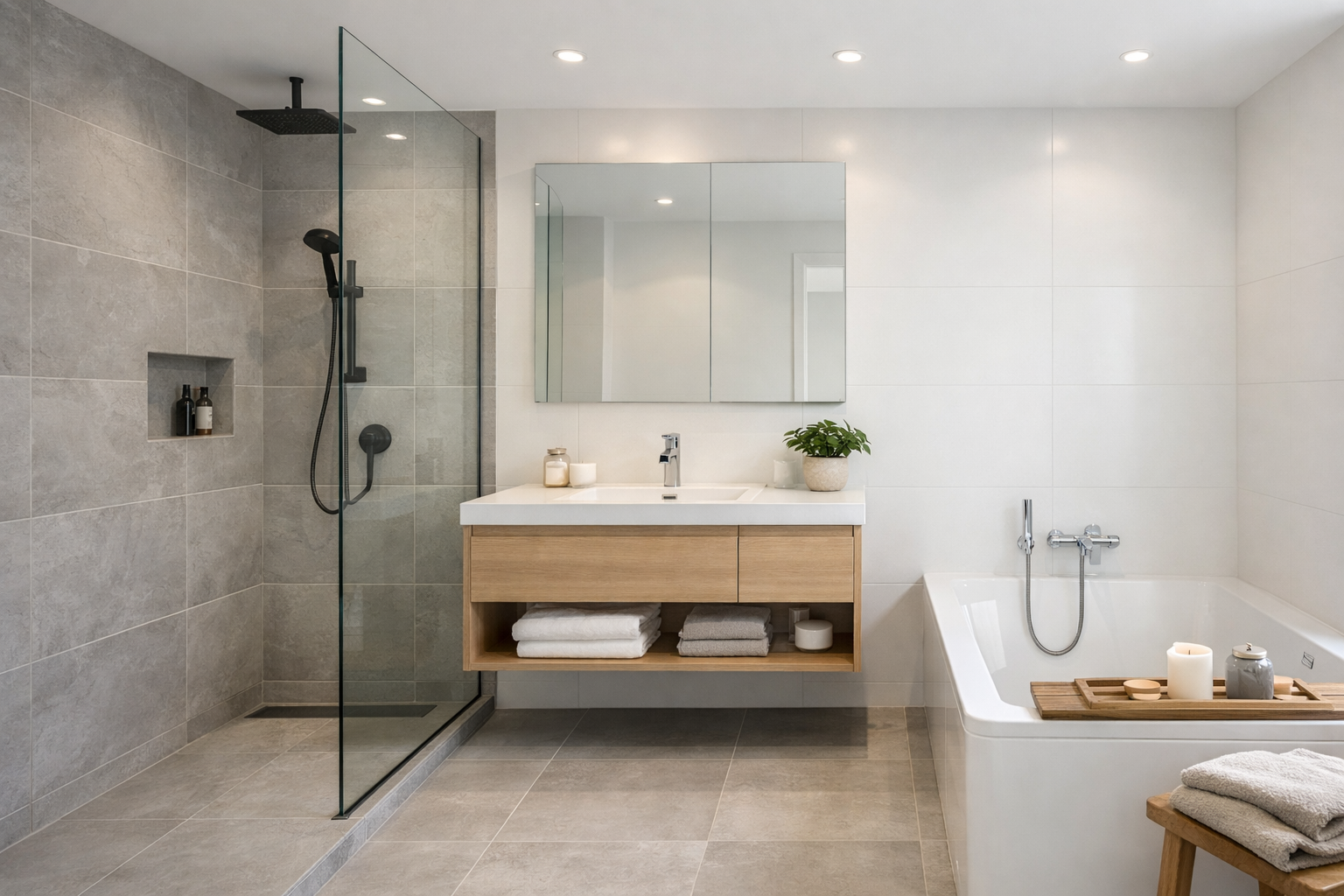
PVC wall panels also have the advantage of being lightweight, easy to maintain, and available in a wide range of finishes that mimic wood or stone, or offer contemporary plain surfaces. Their installation requires no specialist masonry skills, which significantly reduces the overall cost of the project.
Applied coatings: paints and special renders
Beyond panel or tile coverings, some solutions applied directly to the wall also offer effective protection against moisture while preserving the smooth appearance of the surfaces.
Anti-humidity paints
Water-repellent or alkyd paints form an impermeable film on the surface of the wall. Enriched with special resins, they repel water and prevent it from penetrating the substrate. These paints are particularly suited to areas exposed to moderate humidity such as kitchens or well-ventilated bathrooms.
- Special wet-room acrylic paints: vapour-permeable but splash-resistant
- Alkyd paints: excellent water resistance but less eco-friendly
- Epoxy paints: maximum protection for very humid environments such as showers
Preparing the surface remains essential before any application. The wall must be perfectly dry, clean, and treated against existing mould with a suitable fungicidal product.

Lime and cement renders
Hydraulic lime render has remarkable properties for damp walls. This traditional material allows the wall to « breathe » by naturally expelling moisture outward, while preventing liquid water from penetrating. It is particularly suitable for older buildings where stone walls need this water vapour permeability.
Waterproofed cement renders, reinforced with waterproofing additives, create a completely watertight barrier. They are used primarily in cellars, basements, or utility rooms subject to significant moisture.
Comparative table of anti-moisture coatings
| Coating type | Protection level | Durability | Ease of installation | Indicative cost |
| Ceramic tile | Very high | 20-30 years | Moderate | 30-80 €/m² |
| PVC panels | High | 10-15 years | Easy | 15-40 €/m² |
| Waterproof paint | Moderate | 5-8 years | Very easy | 5-15 €/m² |
| Lime render | High | 15-25 years | Moderate | 20-50 €/m² |
| Waterproof cement render | Very high | 20-30 years | Difficult | 25-60 €/m² |
Innovative and specialized solutions
Innovation in the construction sector has enabled the development of new materials combining technical performance and contemporary aesthetics to meet the demands of wet areas.
Ready-to-tile panels
Waterproof rigid foam or lightweight cement construction panels provide an ideal substrate for tiling in wet rooms. These systems already incorporate a waterproof membrane, enabling fast and secure installation while reducing the risk of water infiltration.
Waterproof polished concrete
Polished concrete treated with water-repellent resins offers a contemporary aesthetic finish while providing effective protection against moisture. This seamless coating minimises weak points and creates a perfectly waterproof continuous surface. Its application does, however, require the involvement of a qualified professional to ensure the system’s watertightness.
Epoxy and polyurethane resins
Initially used in industrial environments, synthetic resins are becoming increasingly popular in residential settings. Applied in a thick layer, they create a monolithic, completely waterproof coating that is resistant to chemicals and easy to clean. Their cost remains high, but their exceptional durability justifies the investment in demanding projects.
Selection criteria based on your situation
Choosing the right wall covering depends on several factors that should be analyzed before making any decision. Each situation presents specific constraints requiring an appropriate solution.
- Nature of the moisture: condensation, direct water splashes or rising damp
- Type of surface: plaster, concrete, stone or brick
- Available budget: from economical paint to high-end tiles
- DIY skills: some solutions require the involvement of a professional
- Desired aesthetic: modern, traditional or contemporary design
According to common practices in the construction industry, combining multiple protection systems generally delivers the best results: a waterproof substrate complemented by an impermeable coating and adequate ventilation ensures optimal protection against moisture.
Mistakes to avoid at all costs
Some practices can compromise the effectiveness of your damp-proof coating and cause significant damage in the medium term.
Avoid applying a waterproof coating to a wall that is already damp. Trapped moisture will continue to degrade the substrate from within, causing peeling and mould. A precise diagnosis of the source of the moisture must always precede any coating work.
Never neglect the room’s ventilation. Even with the best waterproof coating, a poorly ventilated room will accumulate condensation that will eventually create moisture problems. Installing an HRV system or adequate ventilation remains essential.
Beware of « miracle » solutions promised by certain products. No coating alone can solve a structural moisture problem such as significant rising damp or a roof leak. These situations require treatments that target the source of the problem before considering a finishing coat.
The importance of professional implementation
The quality of the installation directly determines the effectiveness and durability of the damp-proof coating. Even the highest-performing material will lose its effectiveness if it is poorly installed.
For complex projects or situations involving significant moisture, calling on a qualified professional ensures a precise analysis of the problem and implementation in accordance with best practices. Specialist companies also carry ten-year guarantees that protect your investment.
Even seemingly straightforward work such as applying waterproof paint requires strict adherence to the correct protocol: surface preparation, application of a bonding primer, observance of drying times, and applying the recommended number of coats. These steps are essential to achieving the expected level of protection.
Durably protecting your walls against moisture
Choosing the right wall covering is an essential investment for the longevity of your home. From traditional tiling to innovative resin solutions, each material has its own specific advantages depending on the nature and intensity of the moisture encountered. The key lies in a comprehensive approach: identifying the source of the moisture, treating the problem at its root, selecting the appropriate covering, and ensuring adequate ventilation. This combination of measures guarantees effective and lasting protection for your walls, preserving the value and comfort of your home for many years to come.